

The Art of Curation: How to Choose Original Art, POD, and Frames for Your Space
Choosing the right artwork is a transformative process that defines the character of a room.
Whether you are investing in an original oil painting or a high quality Print on Demand (POD) piece, the harmony between the art, the space, and the framing is what creates a professional aesthetic.
1. Defining the Space and Atmosphere
Every room serves a different purpose, and the art should reflect that intent.
Living Rooms: This is often the heart of the home. Large scale pieces or a "Gallery Wall" (similar to the one in the attached photo) work best here. It is a space for conversation starters.
Professional Offices: Art here should convey innovation and focus. Hybrid art - which blends traditional techniques with digital evolution - is a perfect fit for modern workspaces.
Public Foyers: These areas require "Impact Art." Scale is crucial here; a small painting on a vast wall will disappear. You need pieces that command attention from a distance.
2. Original Paintings vs. Prints (POD)
Understanding the difference is key to building a collection.
Original Art: These pieces possess a unique "soul." You can see the texture, the brushstroke depth, and the natural oxidation of the paint. They are one of a kind assets that grow in sentimental and financial value.
POD (Print on Demand): High quality prints are the perfect way to bring a specific aesthetic into multiple areas of a home or office at an accessible price point. Modern Giclée prints retain the vibrant colors and intricate details of the digital editing process.
3. The Science of Lighting
Lighting can make or break an artwork.
Natural Light: Avoid hanging original paintings in direct sunlight, as UV rays can cause pigments to fade over time.
Directional Lighting: Use track lighting or dedicated picture lights to highlight textures. For oil paintings, angled lighting reveals the 3D nature of the paint layers.
Color Temperature: Warm lights (3000K) enhance traditional oil paintings, while cooler lights (4000K) often complement digital and modern graphic prints.
4. Mastering the Frame
The frame is the bridge between the artwork and the architecture of the room.
Matching the Art: A classic oil painting often suits a deeper, more substantial frame. Graphic or AI evolved works often look best in thin, minimalist "Floating Frames" or simple wood grain borders.
Consistency vs. Eclectic: You can use identical frames for a clean, museum-like look, or mix different frames (as seen in your collection) to create a more personal, organic gallery feel.
The Mat (Passpartout): Using a wide mat around a print can make a small piece feel significantly more prestigious and give the eye "room to breathe."
5. Proportions and Placement
A common mistake is hanging art too high. The center of the piece should generally be at eye level (about 145-150 cm from the floor). When hanging a group of pictures, treat them as one single unit and ensure the spacing between them is consistent (usually 5-8 cm apart).
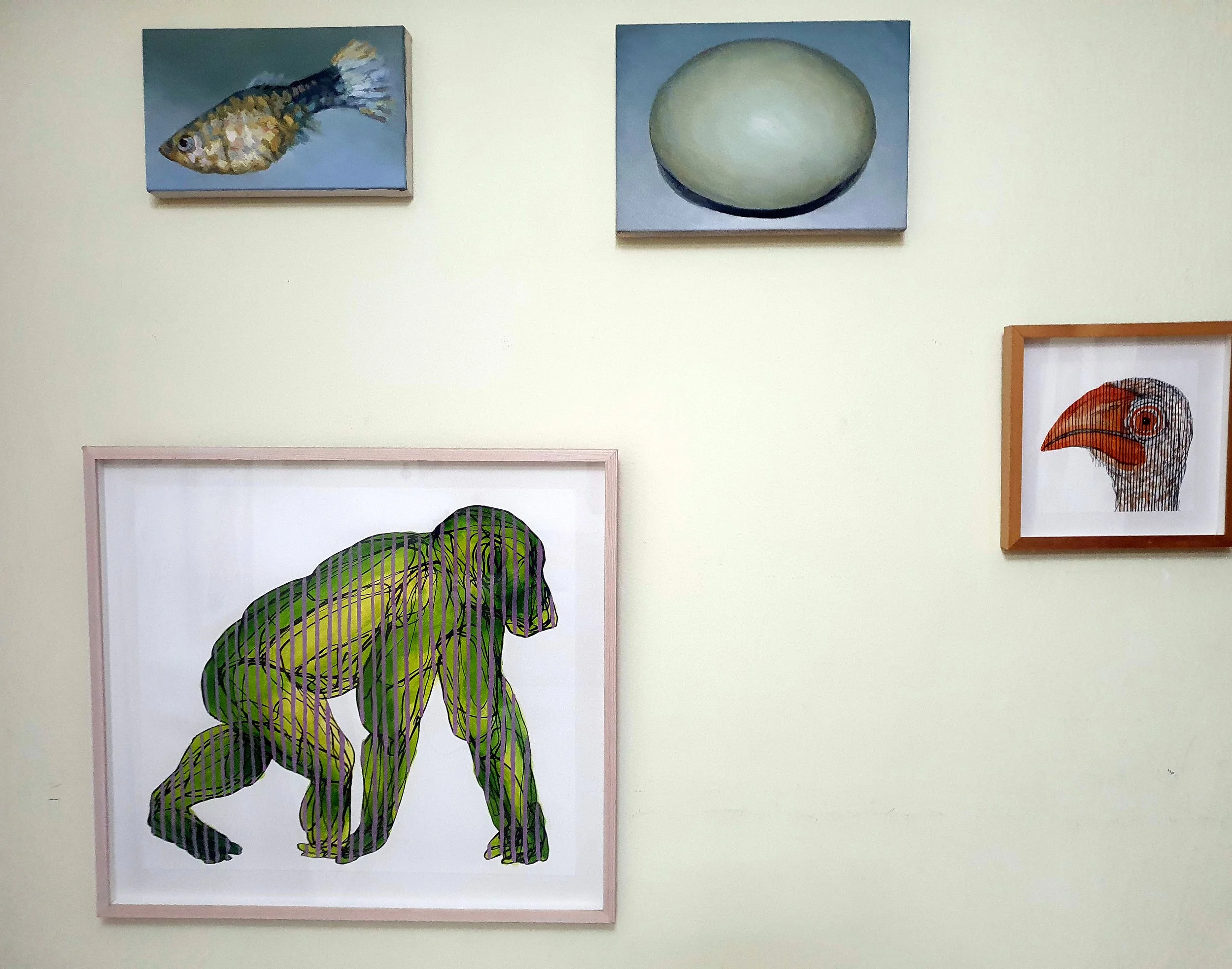
Curated Oil Paintings Gallery Wall
Integrating Eclectic and Biological Art in Modern Design
The collection shown in the attached image demonstrates a sophisticated approach to eclectic curation. It brings together diverse subjects—a traditional, rendered representation of a fish and a soft egg with a more graphic, structured depiction of a green, multi-limbed figure and a stylized bird profile. This combination is highly effective in modern interiors because:
Biodiversity as a Design Theme: Nature and biology are timeless inspirations. The juxtaposition of marine life, an egg, and a surreal biological figure creates a curated "cabinet of curiosities" feel. This is perfect for home libraries, sophisticated dining areas, or creative studios where imagination and science intersect.
Balancing Tradition and Innovation: The softer, traditionally painted pieces (like the fish and egg) ground the collection in classical fine art. The more structured, almost "computed" nature of the green figure and bird profile adds a layer of modern, digital sophistication. This balance ensures the gallery wall feels both rooted in history and forward-thinking, making it a powerful focal point in any modern space.
Using Color and Contrast: The varied frames—some darker, some with deep wooden grain, and some with a thin border—add to the organic, personal feel. The cohesive beige wall color allows the greens, blues, and natural tones to stand out without competing for attention.
