

The Body as Threshold: Yoga, Painting, and the Transcendent Pose
I have been practicing yoga for years. Not as fitness, not as trend - but as a sustained investigation into what the body knows when language runs out.
It was only a matter of time before the mat and the studio began to speak to each other.
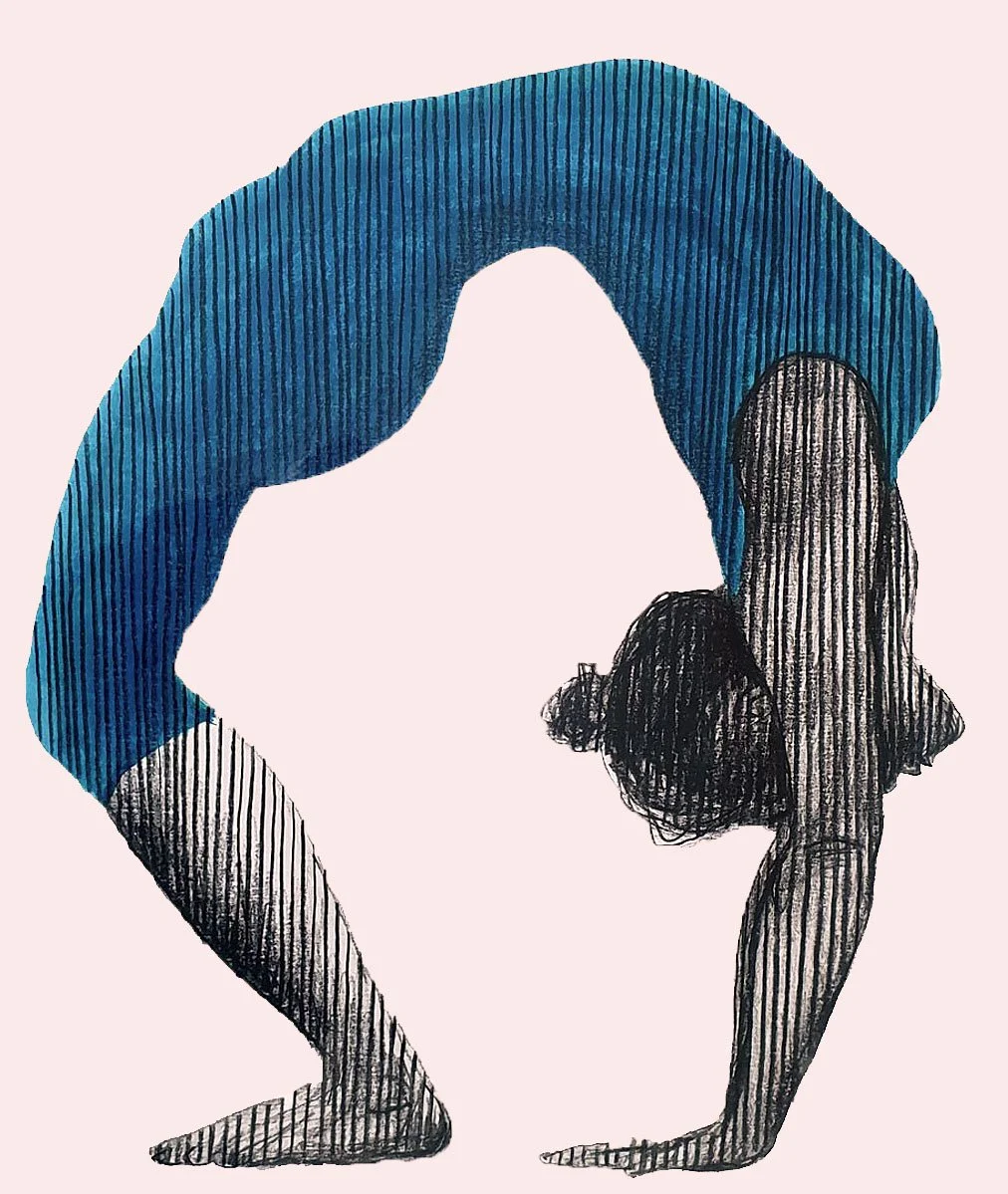
Pencils and Ink on Paper
The yoga pose - the asana - is one of the oldest technologies for altering consciousness that human civilization has produced. What interests me as a painter is not its spiritual curriculum, but its visual grammar: the body folded, inverted, compressed, extended beyond its ordinary range. The asana removes the figure from the social world. It strips away posture in the cultural sense - the performance of self - and replaces it with something rawer. A body in Uttanasana, folded entirely over itself, is no longer legible as a social being. It becomes form. It becomes question.
This is exactly the territory my painting has always occupied.
Image 1 - Mixed media on paper
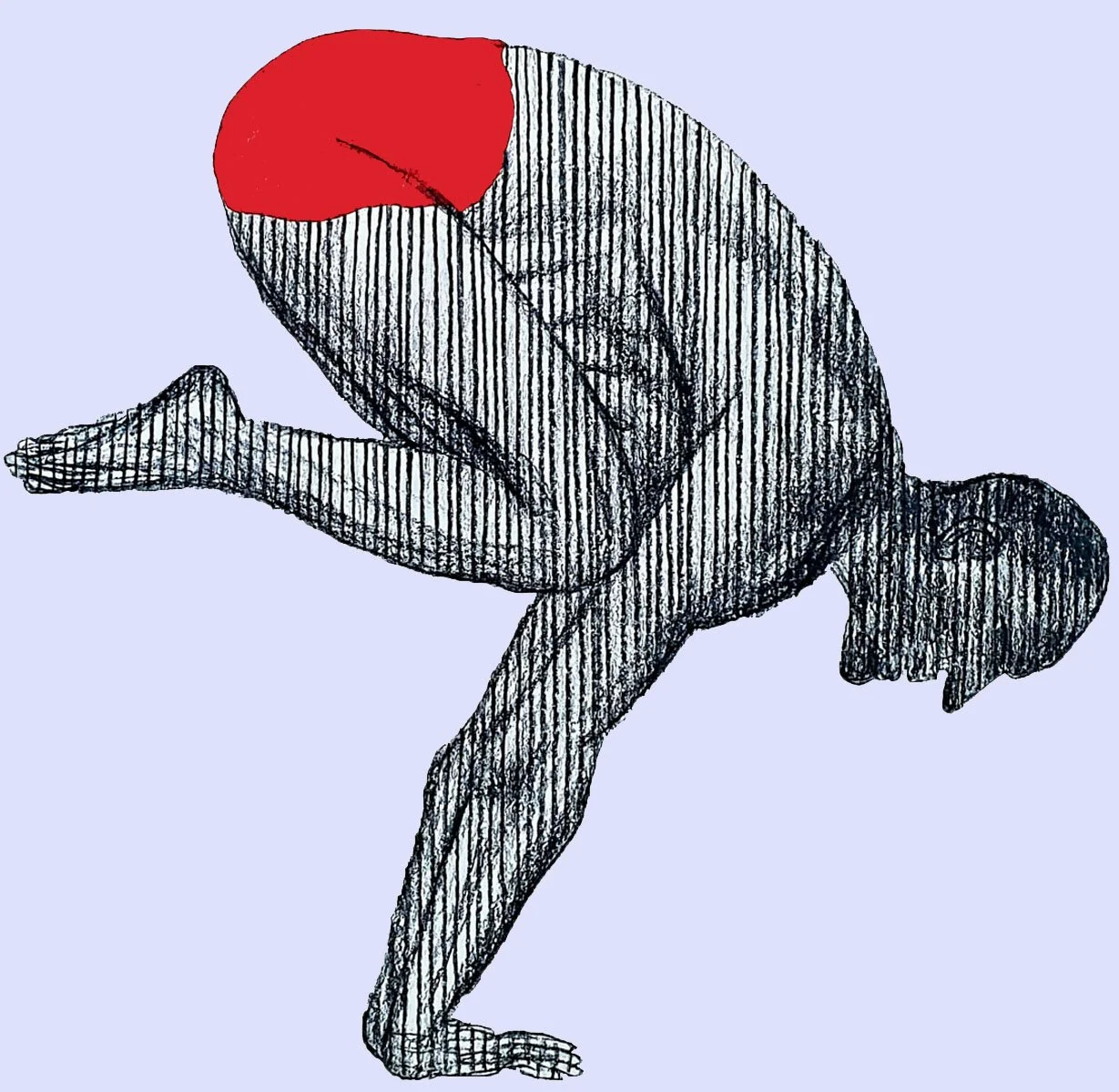
Ink and Pencils on Paper
This figure in what appears to be a balancing inversion - weight thrown forward, limbs suspended - is not performing grace. The crosshatched texture of the body denies idealization; the isolated red form where the head should be suggests something severed, or concealed, or simply elsewhere. The pose demands total physical commitment, yet the head - the seat of identity, of social self - has been replaced by an opaque red mass. The body acts. Consciousness is somewhere else.
In yoga, inversions are said to reverse the ordinary flow of energy. In this image, they reverse the ordinary hierarchy of meaning: it is the body, not the face, that speaks.
Image 2 - Acrylic on Canvas
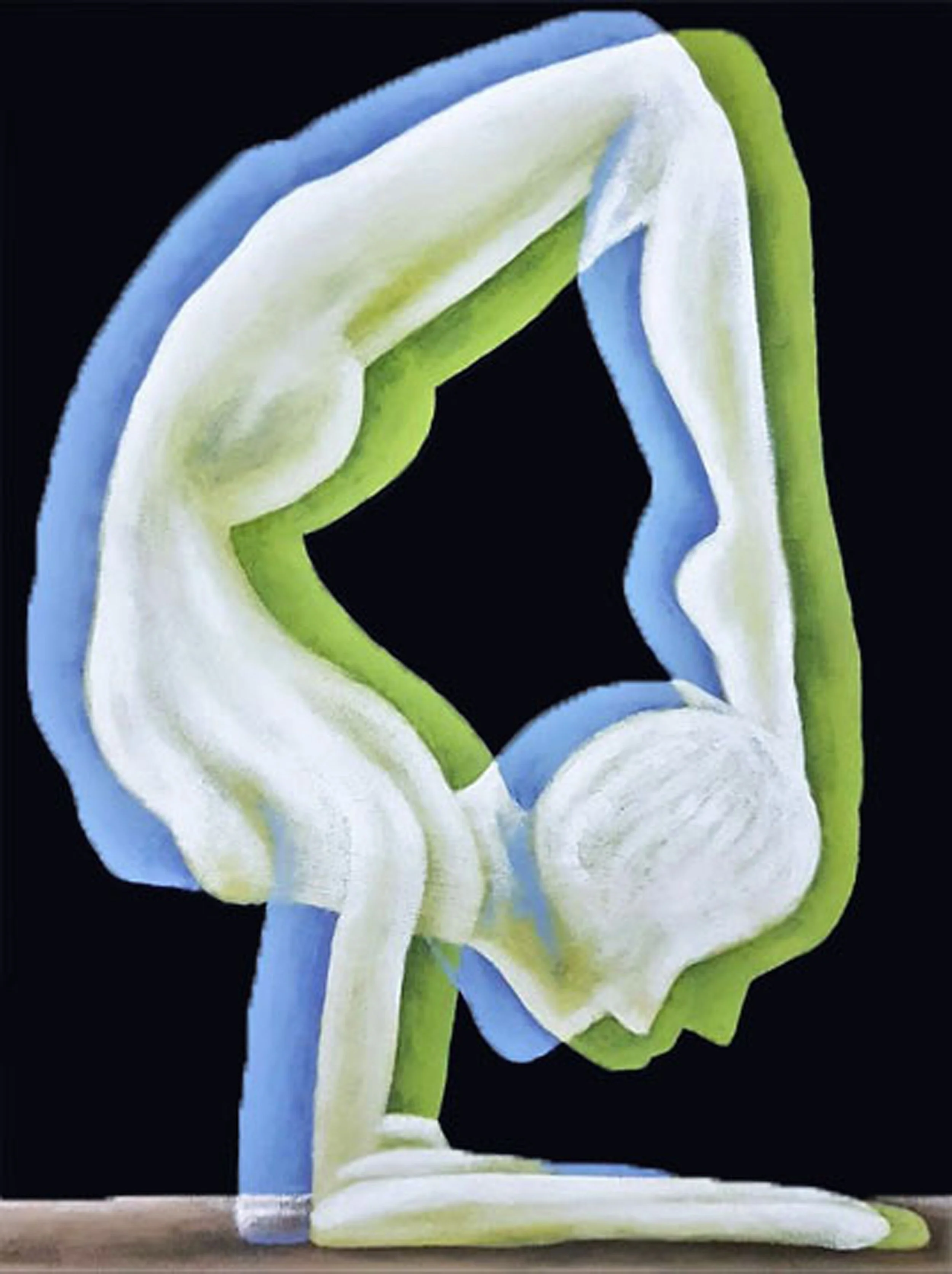
Acrylic on Paper
Here the figure bends into a deep forward fold, the spine curving into a near-perfect arc. The treatment is deliberately softened - luminous whites, layered greens and blues suggesting an aura or energy field rather than physical anatomy. The figure seems less like a body in space and more like a diagram of a state: the layered halos around the form recall both the subtle body of yogic tradition and the motion-blur of long-exposure photography.
What compels me about this posture is its paradox: maximum physical effort produces the appearance of complete surrender. The body works hardest precisely when it looks most still. Painting this means painting contradiction - which is where most interesting things happen.
Image 3 - Acrylic Markers on Paper
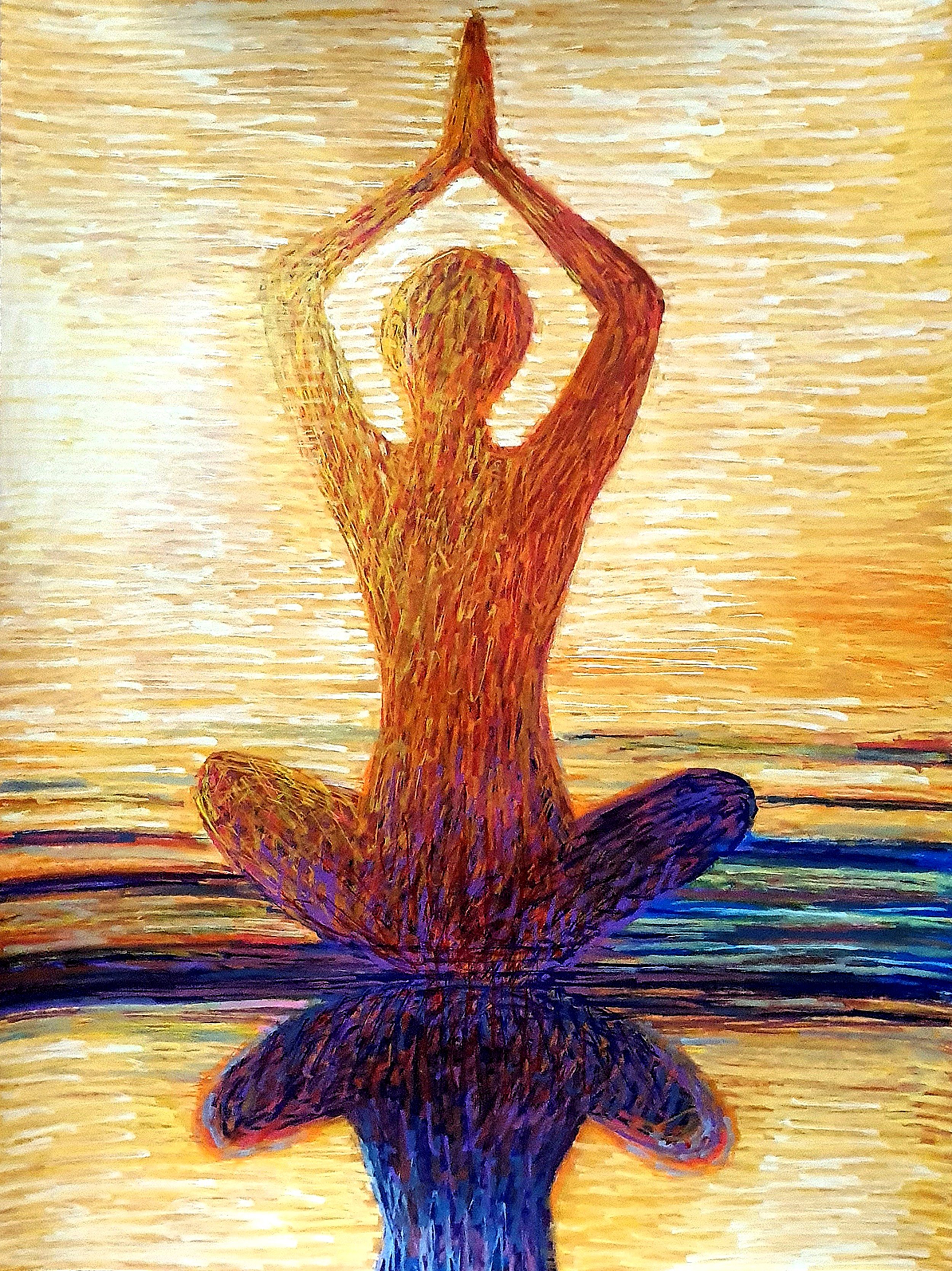
Acrylic Markers on Paper
This is the most explicitly transcendental image in this series. A figure in Padmasana - lotus position - with hands joined overhead in Anjali mudra, seen from behind, dissolving into a field of warm light. The color moves from the deep violets of the earth upward through amber and gold; the figure itself seems to emit rather than reflect light.
I painted this from behind deliberately. The face - and with it, individual identity - is withheld. What remains is posture as archetype: the upward reach, the seated stillness, the figure as axis between earth and sky. This is the asana as it has appeared in iconography across thousands of years and dozens of cultures. The body, when it takes this shape, seems to remember something older than the person inhabiting it.
Image 4 - Pencil and Mixed Media on Paper
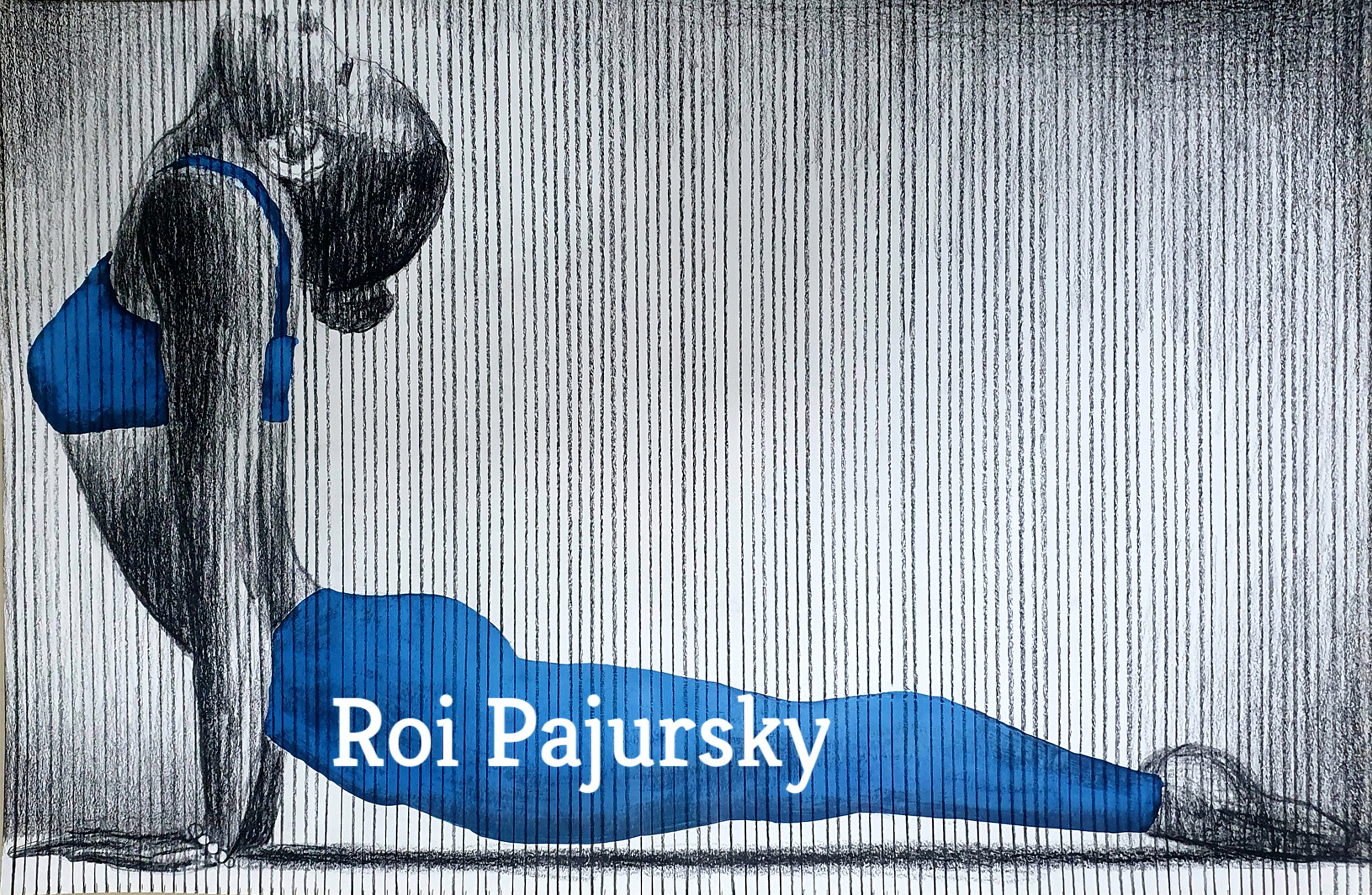
Pencils and Mixed Media on Paper
The cobra pose - Bhujangasana - rendered in dense graphite crosshatching, with a wash of blue marking the body's extension along the ground and the arc of the backbend. The figure is both grounded and rising; the spine lifts while the lower body roots. There is something simultaneously vulnerable and powerful in this posture that I find endlessly paintable: the exposed chest, the lifted gaze, the body opening against gravity.
The blue in this work functions the way color often functions in my practice - not descriptively, but as emphasis. A trace. Evidence of energy moving through form.
Image 5 - Pastel on Paper
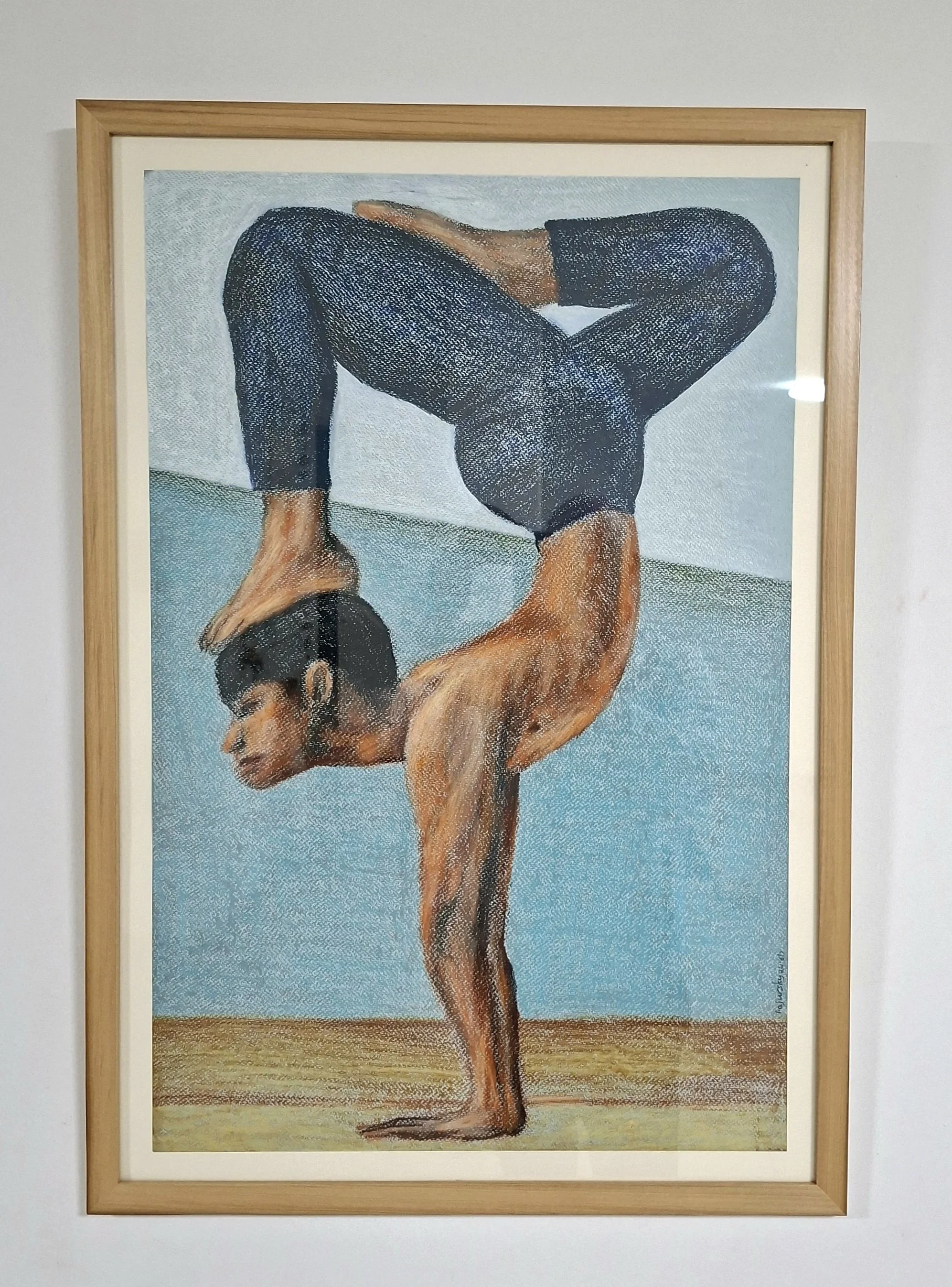
Pastels on Paper
A figure in Vrischikasana - the Scorpion - balancing on hands, the spine folding back so severely that the feet nearly reach the crown of the head. What strikes me most about this painting is the face: composed, almost indifferent, eyes closed. The body is doing something that defies ordinary physical logic, and the face registers nothing. No strain. No triumph.
This is the paradox at the center of advanced practice: the more extreme the physical demand, the more interior the expression becomes. The pose is a form of disappearance - not of the body, but of everything the body is usually asked to perform.
Experience the transition between physical art and digital movement in this yoga-inspired MP4 sequence. Each frame originates from a hand-drawn study, evolved into a seamless flow that captures the meditative energy of a yoga practice.
A note on the video works
Alongside these paintings, I have been documenting the practice itself - the process of moving into and out of these postures - in short video works. What painting compresses into a single frozen moment, the videos unfold in time: the breath, the adjustment, the moment when effort dissolves into stillness. The two forms speak to each other. The painted image is what remains after movement has ended. The video is the movement that the painting implies.
---: at what point does a body in extreme posture cease to be a body and become something else? An icon. A diagram. A threshold.
Yoga has its own answer to this question - the asana is a preparation, a clearing, a way of making the body permeable to something beyond ordinary experience. Painting has a different answer, or perhaps no answer at all - only the image, and what the viewer does with it.
I am interested in the space between those two answers.
A dynamic study of a yoga pose captured in a fluid MP4 format. Based on original figurative drawing, this animation highlights the balance and alignment of the practitioner, offering a unique perspective on traditional asanas through a digital lens.
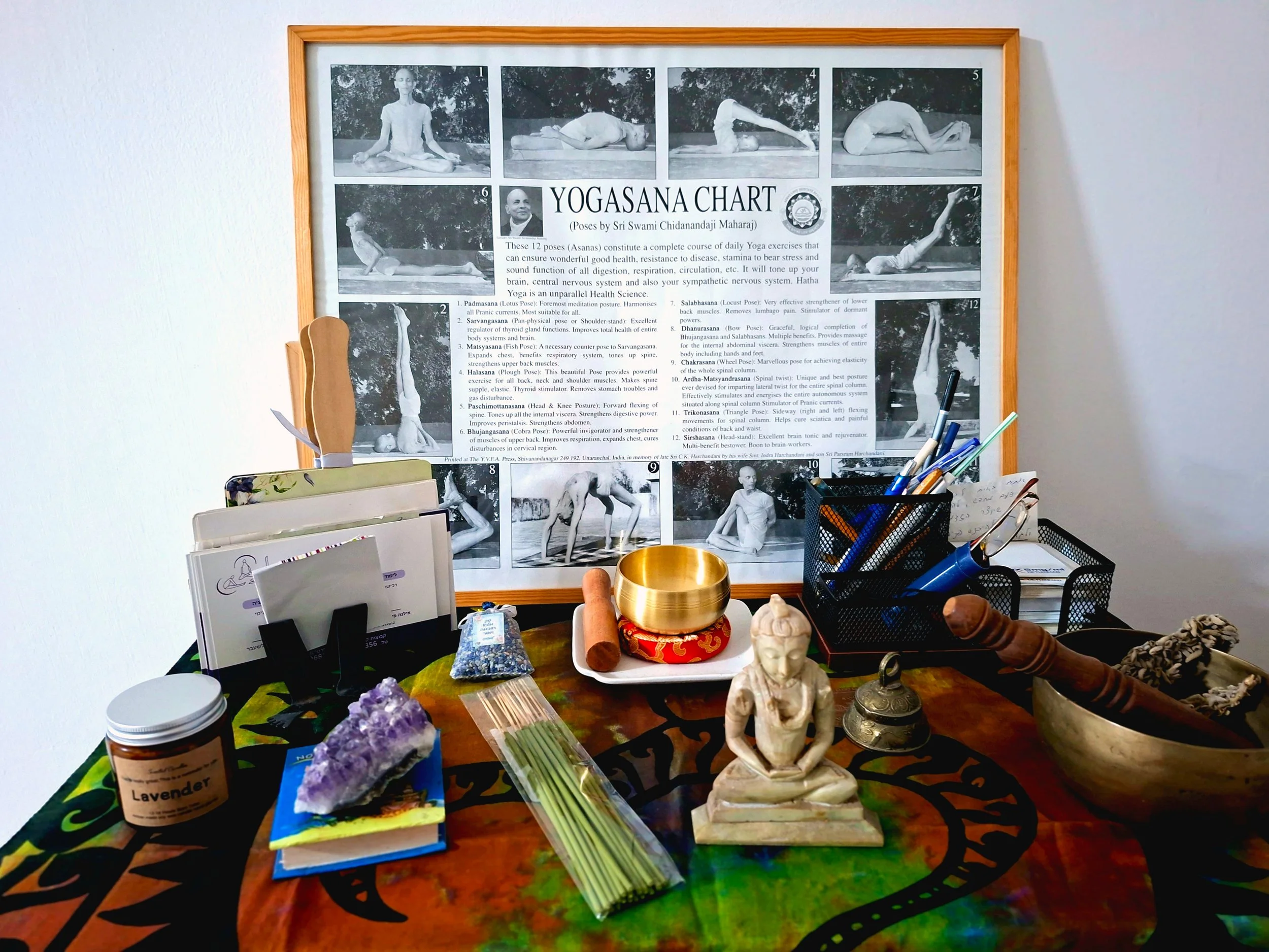
The Yoga Studio
